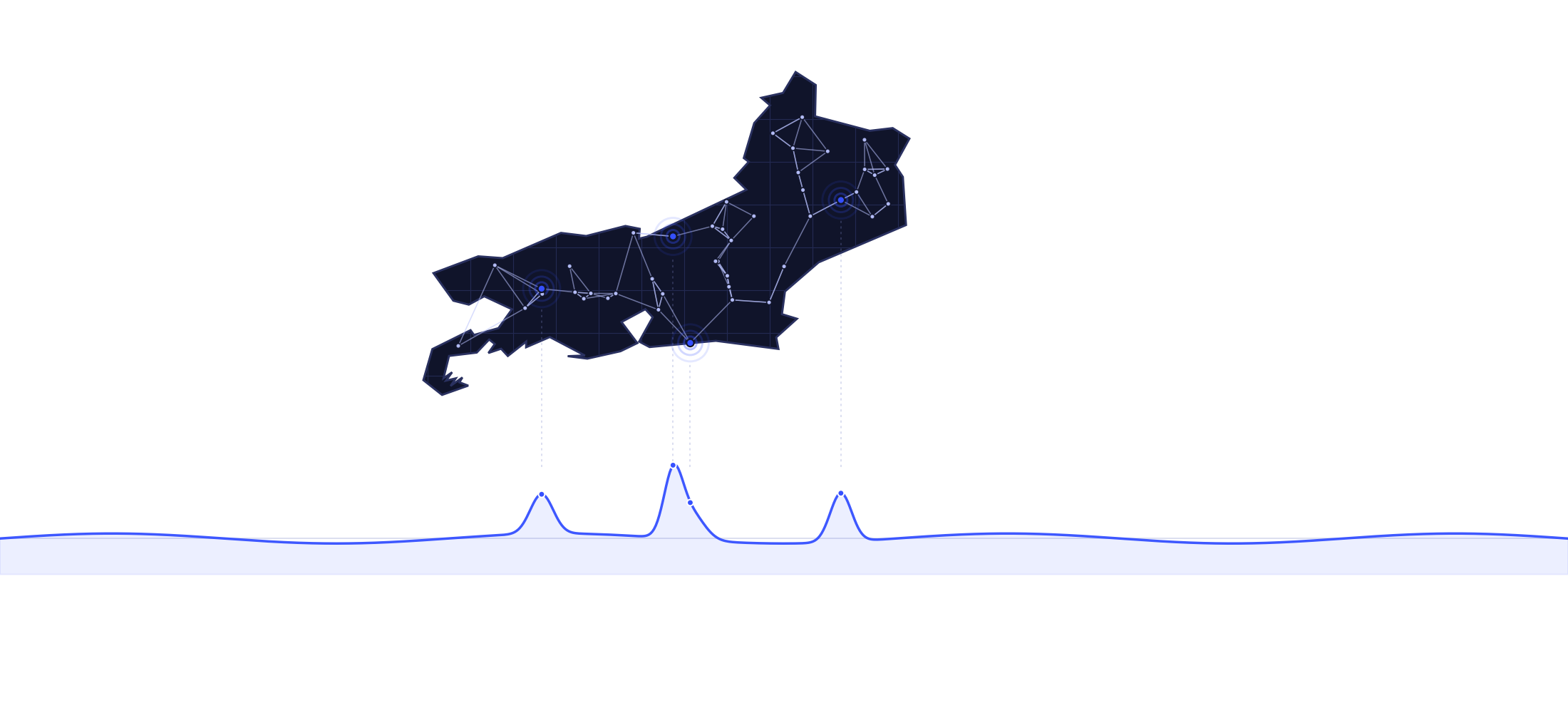
AI for Real-Time Syndromic Surveillance
Using artificial intelligence and geospatial modeling to detect and monitor outbreaks of transmissible diseases in near real time across Rio de Janeiro.
Lead: Guilherme Tegoni Goedert
Syndromic surveillance — tracking patterns of symptoms and clinical presentations rather than waiting for confirmed diagnoses — is one of the fastest ways to catch an outbreak before it becomes a crisis. In practice, though, most surveillance systems in Brazil still run on delayed, manually curated case reports, which means signals of an emerging outbreak can take days or weeks to reach the people who need to act on them.
This project builds AI tools that close that gap. We combine machine learning models for extracting and classifying clinical information from real-world health records with geospatial modeling of disease spread, producing a system that can flag anomalous patterns in transmissible disease activity across the State of Rio de Janeiro as they emerge, rather than after the fact.
The work integrates directly with the state health system's own data pipelines, so that alerts and risk maps are usable by the people running day-to-day surveillance and response — not just a research prototype. It builds on LABORA's broader work in epidemiological modeling and machine learning for health data.
Partners: Secretaria de Estado de Saúde do Rio de Janeiro (SES-RJ)
Funding: FAPERJ, CNPq, and FINEP