A countrywide study on post-COVID-19 condition in Brazil: the Epicovid 2.0
F. C. Wehrmeister, A. M. B. Menezes, M. Dalcolmo, E. C. C. Prendergast, et al.
International Journal of Epidemiology, 2026
Background: The COVID-19 pandemic had severe impacts worldwide. We assessed the occurrence of a post-COVID-19 condition (PCC) in Brazil and described the persistence of symptoms 4 years after the start of the pandemic.
Methods: A population-based survey was carried out in 133 large cities in 2024. The current prevalence of 21 COVID-19-related symptoms was recorded for all respondents, regardless of infection history. The World Health Organization's definition of PCC was adopted. Results were described by country region and socio-demographic characteristics.
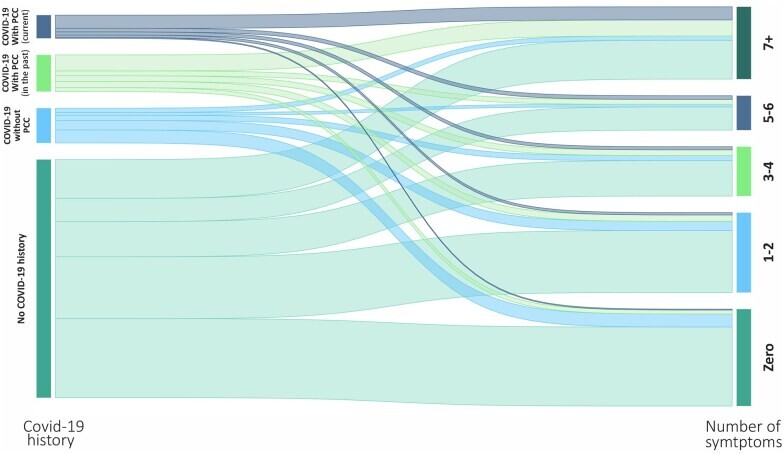
Results: Of the 33 250 individuals sampled, 28.6% [95% confidence interval (CI) 27.3 to 30.0] reported having had COVID-19, of whom 65.1% (95% CI 62.7 to 67.4) fulfilled the criteria for PCC at any time in the past. Prevalence of PCC was highest among those who were hospitalized and needed intubation or oxygen support [85.3% (95% CI 79.6 to 89.7)]. The average number of current symptoms among those with PCC was 7.21 (95% CI 6.73 to 7.69) compared with 2.77 (95% CI 2.62 to 2.92) among those without a COVID-19 history. The most common symptoms for those with COVID-19 history were memory loss, anosmia, loss of sensitivity in the hands, difficulty in concentration, and hair loss. Women and Indigenous individuals presented a higher average number of symptoms compared with those without a history.
Conclusion: A high proportion of individuals who suffered from COVID-19 presented symptoms 4 years after the SARS-CoV-2 emergence; almost two-thirds presented PCC. Population-based studies in different countries are necessary to better understand the epidemiology of this serious condition.