Food insecurity and associated factors during the COVID-19 pandemic in a vulnerable population in Rio de Janeiro: a primary care registry-based survey
A. C. V. Meireles, P. M. Luz, D. Csillag, G. T. Goedert, D. C. Pires, E. M. Jalil, et al.
PLOS Global Public Health, 2025
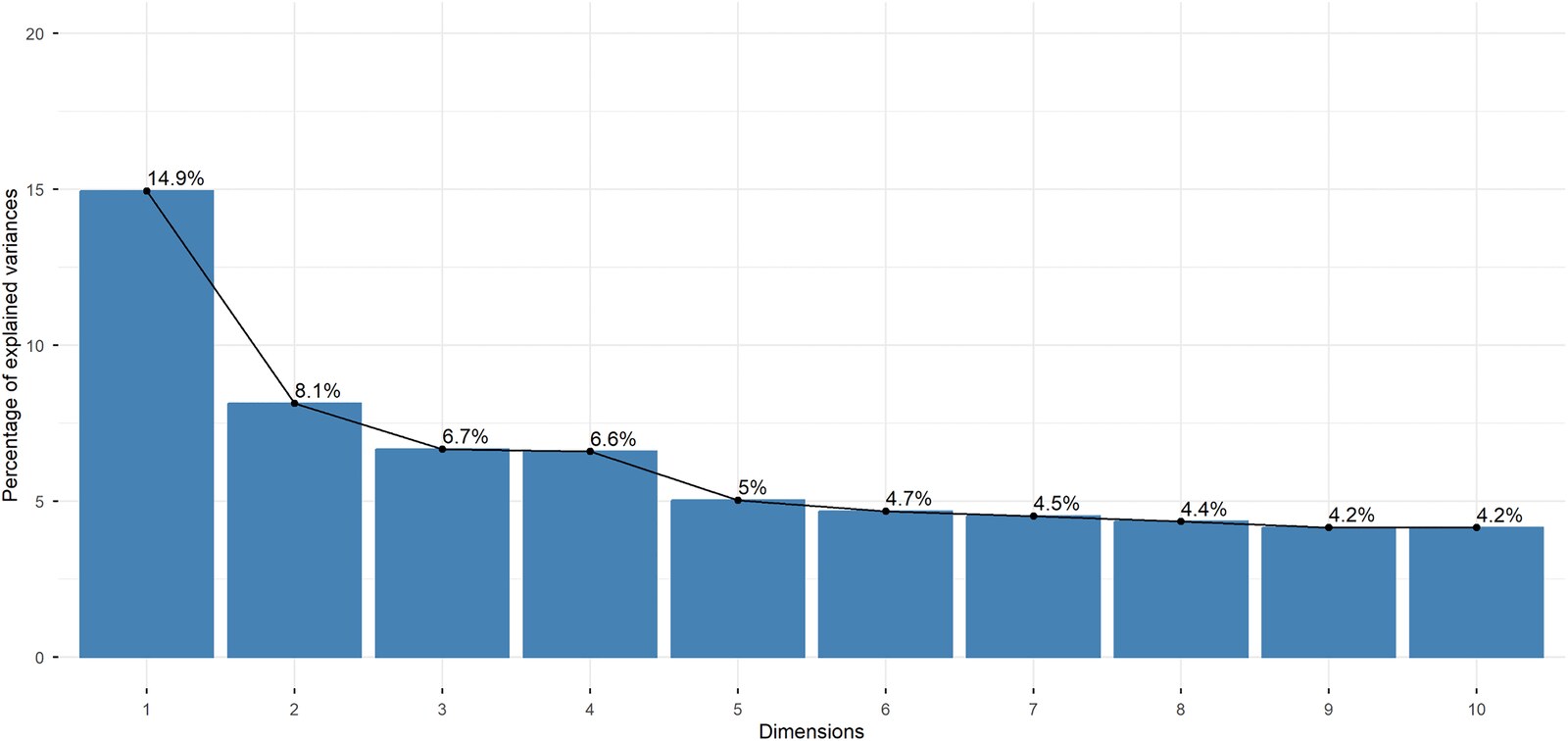
Despite documented increases in food insecurity (FI) during the COVID-19 pandemic, the specific impact on highly vulnerable households within distinct urban contexts, as well as the interplay of various household-level factors in exacerbating this vulnerability, remain understudied. This study investigated FI prevalence and household-level factors associated with moderate/severe FI in Complexo de Manguinhos, a complex of slums in Rio de Janeiro, Brazil, during the COVID-19 pandemic. The Comvida-1 survey was conducted between September/2020 and February/2021 and included individuals aged ≥1 year. FI was measured using the Brazilian Food Insecurity Scale. Multiple Correspondence Analysis (MCA) identified associations between household variables (family composition, income, welfare benefits, job/income losses). Multilevel logistic regression assessed associations between the dimensions identified by the MCA and moderate/severe FI. Among 3864 households, moderate/severe FI prevalence was 14.7% (95% confidence interval [CI]: 13.5-15.9) and ranged from 4 to 28% across the 16 slums comprised in the Complexo de Manguinhos. Two MCA dimensions were associated with FI: Dimension 1 represented chronic socioeconomic vulnerability, with highest contributions from Bolsa Família benefit (10.73%), multiple children in Bolsa Família (9.56%), and presence of children in the household (6.84%). Dimension 4 captured acute COVID-19 economic impacts, including job/income loss (17.24%), reduced working hours (11.44%), and reduced family income (11.30%). Each dimension increased the odds of moderate/severe FI by approximately three-fold (Dimension 1 adjusted odds ratio [aOR]=2.72, 95%CI: 2.19-3.38; Dimension 4 aOR=3.32, 95%CI: 2.42-4.55, both p < 0.001). Both chronic socioeconomic vulnerability and acute COVID-19 economic shocks significantly predicted moderate/severe FI through distinct pathways. Dimension 1 reflected structural inequities from long-term poverty; Dimension 4 captured sudden economic instability. Effective interventions require layered approaches: strengthening social protections for chronic vulnerability (e.g., enhanced Bolsa Família benefits for families with children) while implementing rapid-response mechanisms for economic crises (e.g., emergency cash transfers and job retention programs).